What clients should get from AI-enabled finance outsourcing
A finance leader considering an AI-enabled outsourced service needs to know what will improve. Will reconciliations arrive earlier? Will unresolved items be explained more clearly? Will their team spend less time answering repeated questions or checking incomplete work? A BPO’s proposal should connect AI to measurable improvements in the service the client already buys.
In ISG’s June 2026 survey of 250 senior decision-makers, 70% expected more innovation from their BPO providers. [1] For finance workflows, that means comparing the proposed service with what the provider already delivers. Bank reconciliation offers a practical example.
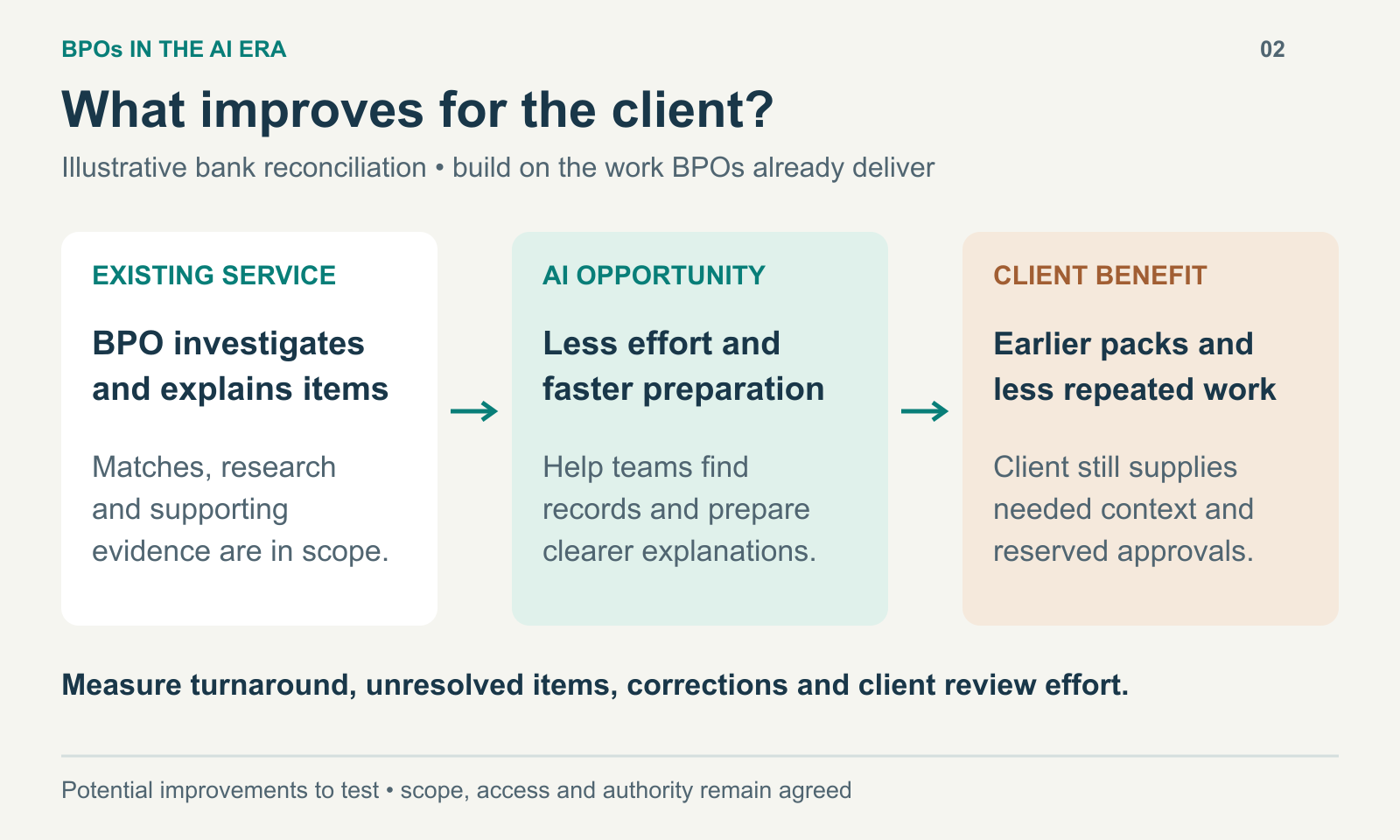
Figure 2. Illustrative bank reconciliation: improve existing delivery and make the client benefit measurable.
1. How will the existing service improve?
BPOs already offer reconciliation services that include investigating differences, preparing supporting records and following up on outstanding items. [3] A credible AI proposal starts with that existing service and identifies what the client will experience differently.
In an illustrative bank-reconciliation service, the BPO already matches transactions, researches exceptions and prepares a reconciliation pack. Its staff may still spend time searching permitted systems, reading remittance details and asking for missing records. The client may need to supply information or approve an action before an item can be resolved.
Suppose a payment clears after month-end, a transaction appears twice in the ledger and a bank fee is missing from the books. Establishing the reason and the appropriate treatment is already reconciliation work. The opportunity is to reach a supported explanation sooner and reduce repeated checks or avoidable requests to the client.
AI could help retrieve and organize agreed records, suggest explanations and draft follow-up questions for the provider’s team to check. Existing matching rules may already handle straightforward transactions. The provider should target work that remains slow or inconsistent and test the benefit across the complete case, including review and corrections.
The reconciliation pack may look familiar: supporting evidence, explanations, proposed actions and an aged list of open items with owners. The improvement should show up in delivery: earlier availability, fewer incomplete explanations and faster follow-up. Using AI in preparation adds value when it improves the service the client receives.
Responsibilities still follow the agreed controls. A provider may post routine entries within delegated authority, while the controller retains specified approvals. In this example, the controller approves proposed journals and the BPO posts them after approval. The proposal should identify who prepares, approves and posts each type of change.
Client input is sometimes necessary. An unidentified payment or a disputed transaction may require someone inside the business to respond. The BPO should investigate what it can, then make a specific request supported by the work already done. A necessary escalation should be distinguished from an item returned because the provider has left agreed work unfinished.
For a BPO already responsible for investigation, this is an improvement to existing delivery. If the parties want to extend the service to additional accounts or more complex exceptions, that is a separate scope decision. Any wider commitment needs the access, expertise and authority to support it.
2. What does the agreement need to include?
Start with the current scope and service levels. For reconciliation, agree the accounts, delivery dates, investigation responsibilities, evidence required and treatment of open items. Fixed-fee, transaction and staffing arrangements can each support a defined service. Public disclosures from listed outsourcing providers illustrate the range of pricing models in use. [2] The agreement should make clear how productivity improvements affect fees, staffing or service levels.
| Pricing basis | How it applies | Agree explicitly |
|---|---|---|
| Fixed fee | An agreed charge for a defined scope and period. | Account and volume coverage, exception complexity, service levels and changes to scope. |
| Per transaction | A charge for a defined unit of work. | Whether investigation is included, what counts as completion and how complex cases are charged. |
| FTE or time | A charge for team capacity or time supplied. | Responsibilities, expected outputs and how productivity changes affect staffing or available capacity. |
Dependencies need to be visible too. Specify which systems the BPO can access, which records the client must supply and who follows up when something is missing. Separate time spent working on an item from time waiting for client or bank input. An improved service needs a credible way to manage both.
3. How will the client know it improved?
Compare performance with the current service: time to deliver the reconciliation, the age of unresolved items, requests for client information and the controller’s review time. Track cases returned for missing evidence or incorrect treatment. Keep accounts, volumes and complexity comparable, and check that fewer open items reflect supported resolution rather than adjustments made simply to clear the list.
The BPO should also measure its full delivery cost, including technology, investigation, review and follow-up. Lower delivery effort could support a better price, more capacity or improved margins, depending on the agreement. At the client review, show which benefits have actually been delivered: quicker reconciliations, less avoidable work for their team or a more dependable service. That gives AI a concrete role in improving finance outsourcing.
Discuss a finance workflow with Across.
Sources
[1] ISG State of BPO study summary
[2] Listed outsourcing providers’ annual filings: pricing models and contract terms (filing 1; filing 2)